I remember perfectly the day I was diagnosed with diabetes.Beyond the initial fear, one of the things that weighs the most are all those phrases you start to hear: "you will no longer be able to do this", "you will have to give up that", "your life will change forever".
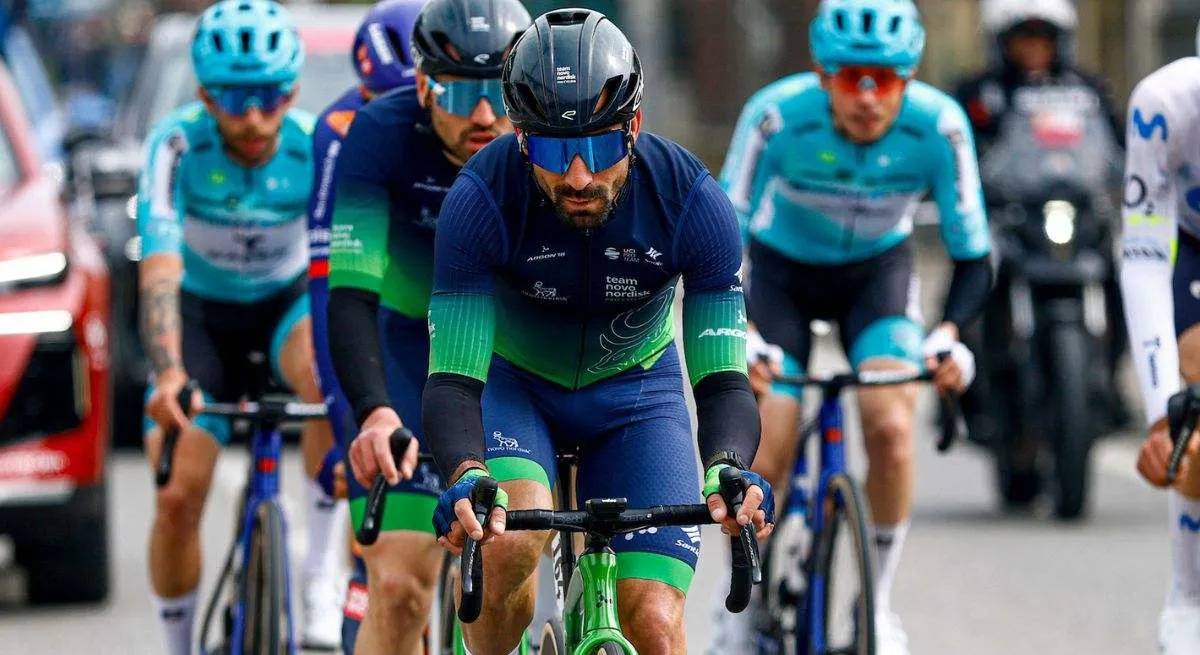
That is why the story of David Lozano, a Catalan professional cyclist and member of Team Novo Nordisk, a team made up entirely of athletes with diabetes, has especially caught my attention.Because his experience reflects something that many of us have experienced: that sometimes the greatest limitations are not set by diabetes, but by the expectations of those who do not really know what it means to live with it.
When he was diagnosed with type 1 diabetes he was told that his sporting career was over.However, years later he continues to compete at the highest level.Not because diabetes has disappeared or because it is easy, but because you have learned to live with it and manage it every day.
One of the most interesting aspects of his testimony is the importance he gives to continuous glucose monitoring systems.
Those of us who use sensors know perfectly well what he is talking about.Years ago, making decisions meant making constant hair controls and, many times, acting almost blindly.Today we can see trends, anticipate hypoglycemia or correct a rise before it becomes a problem.
In the case of a professional athlete, where energy expenditure constantly changes, having this data in real time can make the difference between completing a stage or having to abandon.
But even for those of us who don't compete in elite sport, the lesson is the same: information gives us freedom.Being able to better understand how our body responds helps us make safer decisions and live with less uncertainty.
I also find it very relevant how the medical message has changed over the years.
David comments that when he was diagnosed they made him feel that sport was incompatible with diabetes.Today, just the opposite is happening: more and more health professionals recommend physical activity as a fundamental tool to improve glycemic control, cardiovascular health and emotional well-being.
And you don't have to be a professional cyclist to benefit from it.
Walking, running, swimming, going to the gym or simply staying active can help greatly in the daily management of diabetes.Of course, we all know that exercise adds an extra layer of complexity: adjusting insulin, planning carbohydrates, preventing hypoglycemia and learning from mistakes.
Because if David highlights something, it is that even the most experienced athletes have days when nothing goes as expected.
Perhaps the most inspiring part of the interview is not that a professional runner competes with diabetes, but the impact it has on the families who know the team.
Many parents come to a child's diagnosis with fear of the future.They wonder what they will be able to do, what opportunities they will have, or if they will be able to pursue their dreams.
Seeing people with diabetes competing at the highest level helps break down those fears.It does not mean that diabetes is easy or that it does not require effort, but it does show that good management allows us to develop completely normal life projects.
And this message goes far beyond sport.It applies to studies, work, travel, personal relationships and any goal we set for ourselves.
There is a phrase from David that I find especially valuable: the path is not always full of ease.
Those of us who live with diabetes know that there are days when the numbers don't make sense, when the same meal produces different results or when blood glucose levels seem determined to go against us.
However, each of those days also teaches us something.We learn about our bodies, our decisions, and how to react next time.
The accumulated experience ends up becoming one of our greatest strengths.
Have you ever been told that diabetes would prevent you from doing something?
Have you managed to prove the opposite?
I would love to read your experiences in the comments.💙