{'en': '300,000 euros to research the cure for diabetes. Will it be enough?', 'es': '300.000 euros para investigar la cura de la diabetes ¿Será suficiente?'} Image

300,000 euros to research the cure for diabetes. Will it be enough?

  
fer
04/10/2026 10:11 a.m.

There is news that, at first glance, should fill us with hope... but that also invites us to reflect a little beyond the headline.

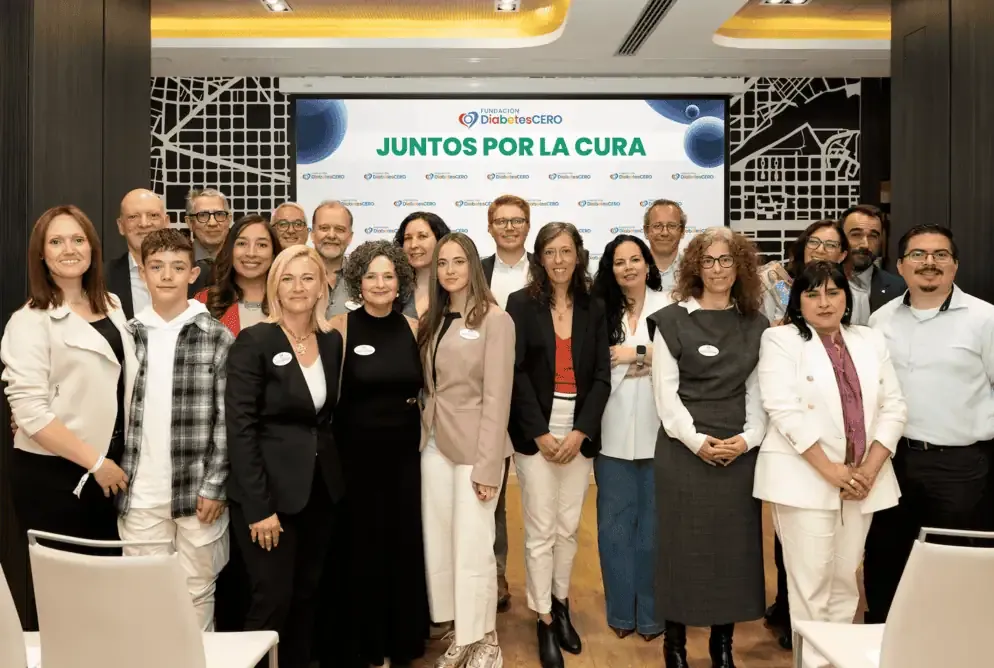
The DiabetesCERO Foundation has announced the donation of 300,000 euros to promote four research projects focused on the cure for type 1 diabetes. On paper, it sounds good: support for new immunotherapies, stem cell research, innovative studies... all focused on moving towards something that we all want.


But to be honest... to what extent is this enough?


When we talk about biomedical research, we are talking about complex, long and extremely expensive processes.Clinical trials, development of therapies, validation of results… all of this requires millions, not hundreds of thousands.And this is where many of us may feel a certain bittersweet feeling.

Because of course it is positive that resources are allocated.Of course every euro adds up.But it also gives the impression that, sometimes, these types of initiatives remain more in the gesture than in the real impact.

And it is inevitable to ask: are we really moving towards a cure... or are we maintaining a system that needs to continue functioning, financing and justifying itself year after year?

This is not a criticism of the researchers, far from it.They are probably the ones who suffer the most from this lack of structural resources.It is rather a reflection on the model itself: small dispersed contributions, fragmented projects... compared to the real magnitude of the problem.

Meanwhile, people with type 1 diabetes are still here, day by day, managing a disease that gives no respite.And that means that any news about “progress towards a cure” is received with enthusiasm… but also with caution.

Perhaps the conversation we should have as a community is different: how we ensure that research has a truly transformative impact.How do we move from small initiatives to solid, sustained and coordinated strategies that truly accelerate change.

Because in the end, this is not about headlines.It's about lives.

What do you think?

Do you think that these types of initiatives really make a difference or do they also raise doubts about their real impact?

I read you.

Diabetes Tipo 1 desde 1.998 | FreeStyle Libre 3 | Ypsomed mylife YpsoPump + CamAPS FX | Sin complicaciones. Miembro del equipo de moderación del foro.

Autor de Vivir con Diabetes: El poder de la comunidad online, parte de los ingresos se destinan a financiar el foro de diabetes y mantener la comunidad online activa.

Sígueme en Instagram

  
JulioGar
04/10/2026 11:32 a.m.

For me personally, the context is given by the global research budget destined to search for a definitive cure and the net business volume derived from Type 1 Diabetes...Since 1997, the year I debuted, approximately $7.1 billion has been allocated to research from public funds and charities and foundations.

By 2026 alone, the turnover of Type 1 Diabetes will be about 60 billion dollars.

If the dream business model in pharma is the chronicification of diseases, the fact that there are serious intentions to end Diabetes is an idea that is difficult for me to digest...

I personally have no hope of seeing a cure.I hope I'm wrong...

I leave a table with estimated income by company, only in the Diabetes branch:

CompanyMain SegmentEstimated Diabetes Income (Annual)
NordiskInsulins and GLP-1>$30,000 M (Total diabetes)*
Eli LillyInsulins>$15,000 M (Total diabetes)*
DexcomMonitoring (CGM)~$4,500M
AbbottMonitoring (FreeStyle Libre)~$5,500M
MedtronicInsulin Pumps

~$2,500M

37 años (30 años con Diabetes Tipo 1).
Low Carb Athlete (Finisher Utratrail/Utracycling events)
Solostar+Fiasp+Libre2Plus

  
theOne
04/10/2026 10:46 p.m.

Hello @fer,

Unfortunately, with 300,000 euros I believe that little can be done, and even less so if it is spread over several projects.I understand that there are high costs for equipment, supplies, salaries of scientists, ... and with this amount it will barely be possible to cover a few months of research for each project, although it will always be better than nothing.

However, I consider that the initiative of these foundations and associations such as DiabetesCero and Aredi are truly admirable since they are made up of diabetics, fathers and mothers of children with diabetes, and who collaborate altruistically to collect funds and then be able to help finance these research projects.

I assume that the money is obtained mainly from membership fees, events, and non-refundable donations.I am afraid that the contributions from the public sector must be very small, so in the end the funds collected are very limited.

When possible I try to go to these types of events to collaborate, since a part of the entry will end up being allocated to research.It's just a drop, but every one counts.In case anyone is interested and is close by, Aredi has organized a walk for diabetes on May 10 in Viladecans (viladecans hike).

The large pharmaceutical companies with products for diabetes (Novo Nordisk, Elli Lilly, Sanofi,...) are unlikely to invest in a cure for diabetes since it would be throwing stones at their own roof.Companies are businesses and their objective is to maximize the benefit for the shareholder, which is why their line of research is aimed at treating the disease, working to obtain the best product that allows them to attract the greatest number of patients.Curing the disease is not profitable.


LADA 2022. Inicio insulina Abril 2025.
Toujeo, y Fiasp con NovoPen Echo Plus.
Dexcom One+
Glicosilada: 4.9

  
Regina
04/12/2026 3:54 a.m.

It all adds up, but the most effective advances have to come from public research, independent of pharmaceutical interests.

I have confidence in Chinese researchers, for example.There they are already applying treatments aimed at a cure, because the state is the first interested party..

Hija de 35 años , diabética desde los 5. Glico: normalmente de 6 , pero 6,7 la última ( 6,2 marcaba el Free)
Fiasp: 4- 4- 3 Toujeo: 20

  
Carussa
04/14/2026 10:14 p.m.

All help is welcome, that's true, but with that figure little can be done.As someone has already pointed out, I believe that the public research budget should be greater, for this and other diseases.

As soon as I debuted, I was very confident that a cure would emerge.Now, sadly, I see it further and further away and I think that at least I will not see it come true 😔

DM1 desde octubre de 2019 | Toujeo + Fiasp | FreeStyle | febrero 2023: HbA1c 5,9

  
JulioGar
04/15/2026 11:57 a.m.


@Carussa said:

All help is welcome, that's true, but with that figure little can be done.As someone has already pointed out, I believe that the public research budget should be greater, for this and other diseases.

As soon as I debuted, I was very confident that a cure would emerge.Now, sadly, I see it further and further away and I think that at least I will not see it come true 😔

It's another melon, but... To what extent can giving hope or talking about a possible cure at the time of debut impact acceptance and adherence to treatment?In my case, I consider that I was very lucky because my parents from the first moment helped me see Diabetes as something that would always be with me, but I am convinced that the path would have been much more frustrating and complicated if I had placed excessive confidence that "they would cure me" in a few years.

I am convinced that in Daibetes, as in many other chronic diseases, the capacity for agency and the locus of control has to come from oneself.Feeling like we at least control something.It does not mean not having hope, if it comes then welcome it, but you cannot live life convinced that you are going to win a Euromillion and until then, put it on pause.

37 años (30 años con Diabetes Tipo 1).
Low Carb Athlete (Finisher Utratrail/Utracycling events)
Solostar+Fiasp+Libre2Plus

  
Sherpa41
04/15/2026 9:44 p.m.

I think totally the opposite.Telling a child today, as "doctors" like to do so much, that they will have diabetes forever is very cruel and is most likely a lie in their case.

And in moments of depression it can push you to commit suicide.As I was about to do several times.And just that little hope in a future cure stopped me.

Without that hope, I wouldn't have even agreed to take insulin when I debuted.When they told me that I was about to go into a coma, I was very hesitant, but because of that small hope (derived from news that I had read, never from doctors) I finally accepted.


En 1922 descubrieron la insulina, en 1930 la insulina lenta. ¿Que c*** han hecho desde entonces?

Join the Discussion!

To participate in this thread, please register or log in.


💙 Join the power of the community

Choose your store and the book edition. Your purchase helps this forum continue to grow and support people living with diabetes, their families and friends.

💙 No ads. Just real support. Every book counts — it’s more than a purchase, it’s a gesture of solidarity that keeps this community alive.

We’ll auto-select your country if available.
Book edition