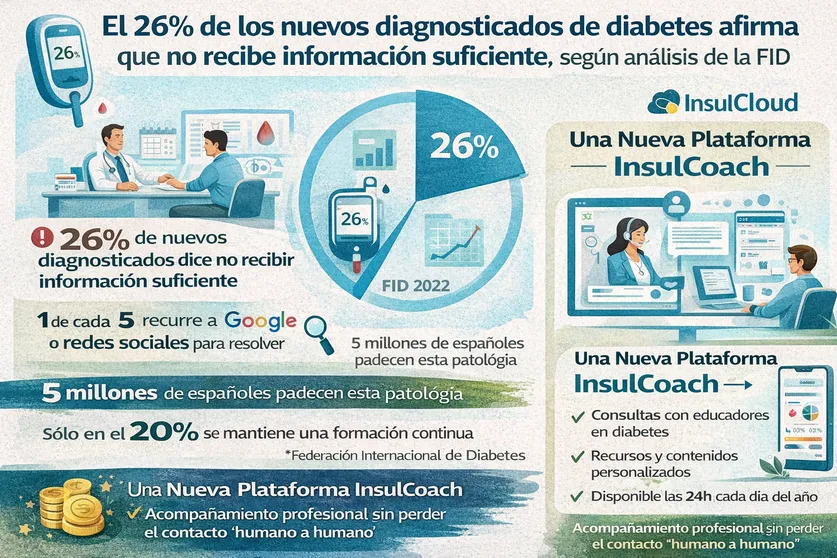
Receiving a diabetes diagnosis should always be accompanied by clear information, support and time to understand what comes next.However, the reality reflected in this article is very different and, for many of us, all too familiar.According to data from the International Diabetes Federation, one in four newly diagnosed people feels that they do not receive enough information at the most delicate moment, just when the most questions and fears appear.
In Spain, where diabetes has one of the highest prevalence in Europe, the problem is not only how many people live with the disease, but how they are supported.Knowing that there are millions of undiagnosed people and that many of those already diagnosed feel disoriented should make us reflect.Because diabetes is not managed just with a prescription or an analysis: it is lived every day, in every meal, in every daily decision.
The study also shows something that we constantly see in the forum: in the absence of answers, many people end up turning to Google or social networks to resolve basic questions.And although the Internet can be a great source of support, it can also generate confusion, fear, or unreliable information if you don't know where to look.The absence of ongoing training in healthcare centers leaves many people feeling like they are walking alone, improvising, when what they need most is understanding and guidance.
Adapting to diabetes is not only technical, it is also emotional.Learning to eat differently, to plan physical activity, to understand the impact of stress or schedules is not achieved in a single consultation.That is why any initiative that seeks to accompany, resolve doubts and reduce the anxiety generated by not knowing if you are doing it right or wrong is so important.But it is also essential to recognize the irreplaceable role of patient associations and communities.
And this is where the value of community becomes evident.Spaces like this forum exist precisely because medical information is necessary, but not always sufficient.Sharing real experiences, mistakes, learning and fears helps to normalize diabetes and ensure that no one feels like they have to face it alone.Reading other people who have already gone through that first shock can make a huge difference.
Because when information arrives late or is insufficient, the community arrives to fill that gap.And together, the path always weighs less.